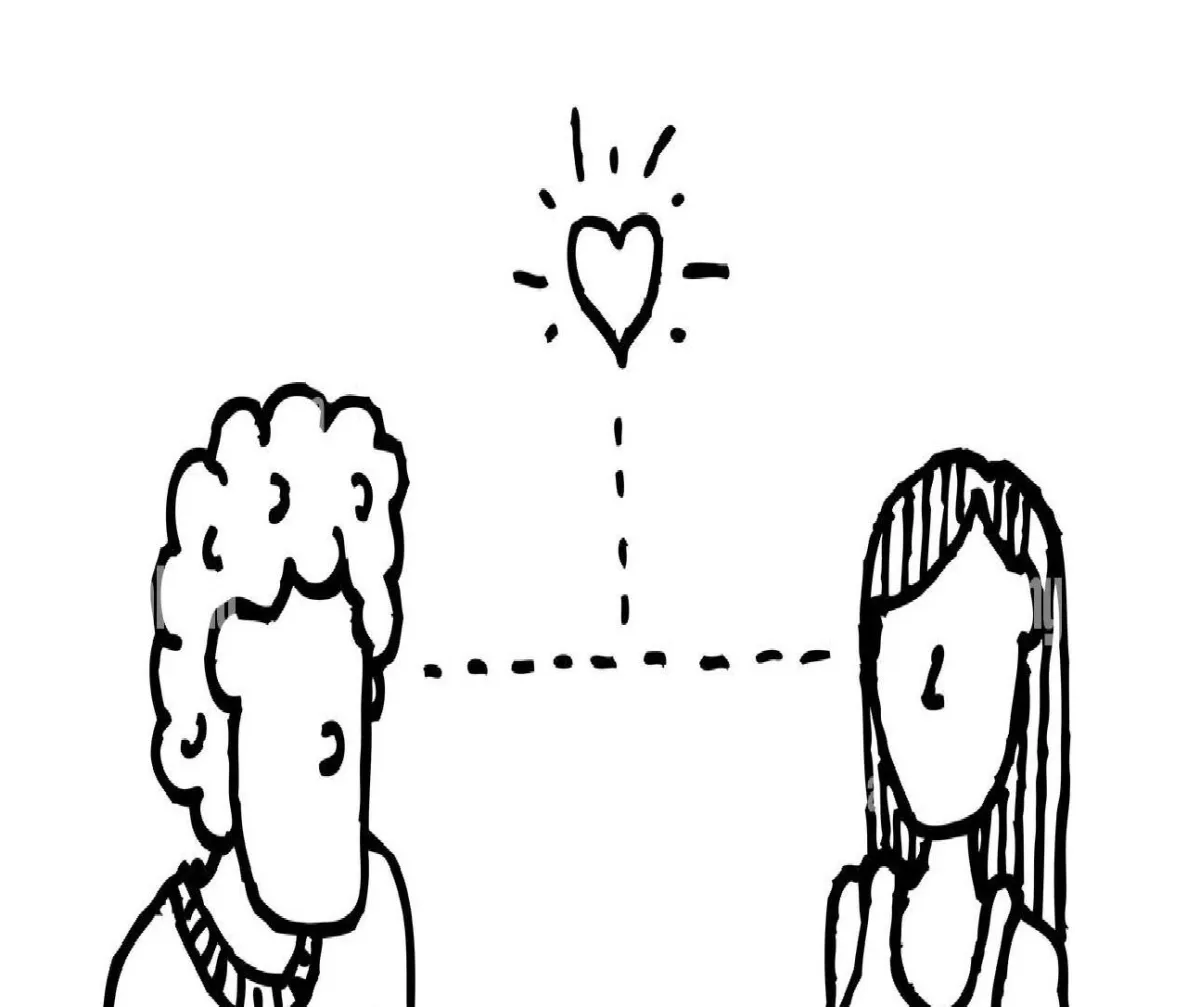
Is Love at First Sight Real?
Is Love at First Sight Real, or Just Infatuation?
The idea of “love at first sight” is a common cultural narrative, often romanticized in films and literature. However, psychological research suggests that this experience is more closely linked to immediate attraction and idealization than to enduring love. Understanding the difference is critical for setting realistic expectations in relationships.
Studies on romantic attraction show that people can experience intense feelings of connection within seconds of meeting. Zsok et al. (2017) found that self-reports of “love at first sight” are more strongly correlated with physical attraction than with feelings of deep attachment. In fact, the concept appears to reflect a powerful initial attraction combined with cognitive projection, where individuals map desired qualities onto a new acquaintance. In other words, we have a tendency to fantasize about potential new partners, and project qualities we want them to have, onto someone to whom we are initially strongly attracted.
From a biological perspective, early-stage attraction is associated with dopamine surges and heightened activity in brain regions linked to reward (Fisher, Aron, & Brown, 2005). These neurochemical processes produce euphoria and motivation to pursue the other person, which may be mistaken for enduring love. However, genuine love involves additional components such as trust, commitment, and shared experiences that develop over time (Hatfield & Rapson, 2009).
Practical Implications
While attraction at first sight can spark interest, individuals should remain aware that it does not guarantee long-term compatibility. Healthy love emerges through consistency, emotional intimacy, and shared growth. Allowing time for a relationship to unfold creates the conditions for authentic love to develop.
Conclusion
“Love at first sight” is better understood as a form of immediate infatuation rather than enduring romantic love. Recognizing this distinction helps individuals approach relationships with curiosity while maintaining realistic expectations.
👉 For strategies on building real, lasting love, see my course Keeping the Love You Find.
References
Fisher, H. E., Aron, A., & Brown, L. L. (2005). Romantic love: An fMRI study of a neural mechanism for mate choice. Journal of Comparative Neurology, 493(1), 58–62.
Hatfield, E., & Rapson, R. L. (2009). Love and attraction. In M. L. Maehr, S. Karabenick, & T. Urdan (Eds.), Advances in motivation and achievement (Vol. 16, pp. 139–164). Emerald.
Zsok, F., Haucke, M., De Wit, C. Y., & Barelds, D. P. H. (2017). What kind of love is love at first sight? An empirical investigation. Personal Relationships, 24(4), 869–885.
